
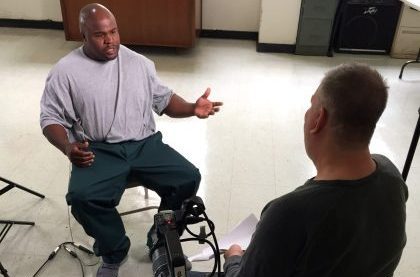
Lamont McKoy in 2017, before his release from prison.
Lamont McKoy:
Search for the Real Killer
Projected Release: TBA
In 1991, 18-year-old Lamont McKoy was convicted of murdering Myron Hailey in a drug deal gone bad.
Four years later, McKoy—who has never wavered in his claims of innocence—reached out to police from prison, saying he’d heard rumors that a man named William “Rat Rat” Talley was actually Hailey’s killer.
McKoy gave cops the names of 10 people he thought might confirm the rumors.
“Please don’t cover this up,” McKoy’s 1995 letter to police read. “You know Rat killed that man I’m in prison for. So please hear me out.”
Investigators had already heard from four cooperators who named Talley/Rat as the shooter.
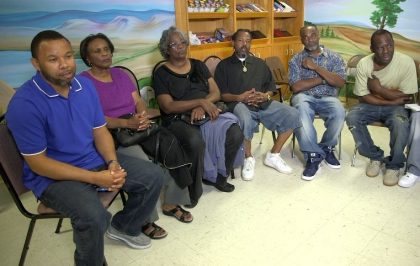
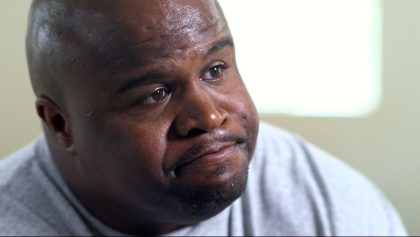
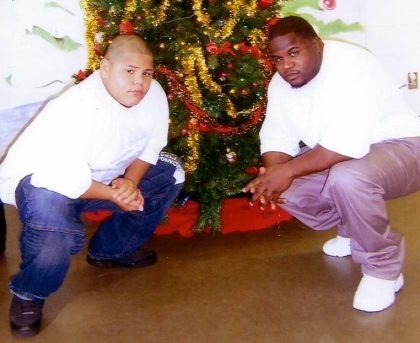
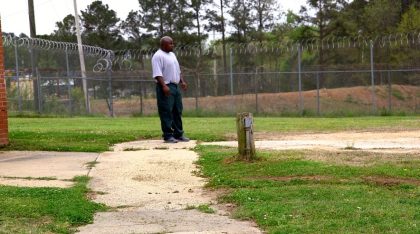
Click or swipe to see the images in the carousel above.
In addition, a federal prosecutor had just told a jury in a drug trial involving Talley/Rat that, even though he wasn’t charged with Hailey’s killing, Talley/Rat “shot him dead.”
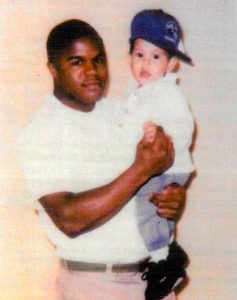
McKoy visits with his son in prison in the early 1990s. Lamont McKoy Jr. was born shortly before his father was convicted.
“Evidence presented in federal court conflicts with the evidence that was presented in the state court against McCoy, which is shocking,” says one of McKoy’s attorneys, Jamie Lau.
Three decades later, however, McKoy is still fighting to clear his name.
It all began on January 25, 1990 when 30-year-old Hailey was found slumped behind the wheel of his car off the side of the road in Fayetteville, North Carolina. He was dead from a bullet, shot through the car. Based on tire tracks where the car went off the road, police concluded Hailey was traveling east when he was shot, and then careened down an embankment.
This led police to focus their investigation on a nearby gang shooting that occurred earlier that day, sensing that the two incidents had to be related. Yet most of their leads ran dry.
Then, a month later, a man named Bobby Lee Williams told police that McKoy had killed Hailey in a drug dispute. He claimed McKoy tried to sell Hailey powdered aspirin disguised as crack cocaine—but that Williams intervened and forced McKoy to hand over real drugs. Williams then said he watched McKoy chase Hailey as he drove away, firing a gun at him, and his car, twice.
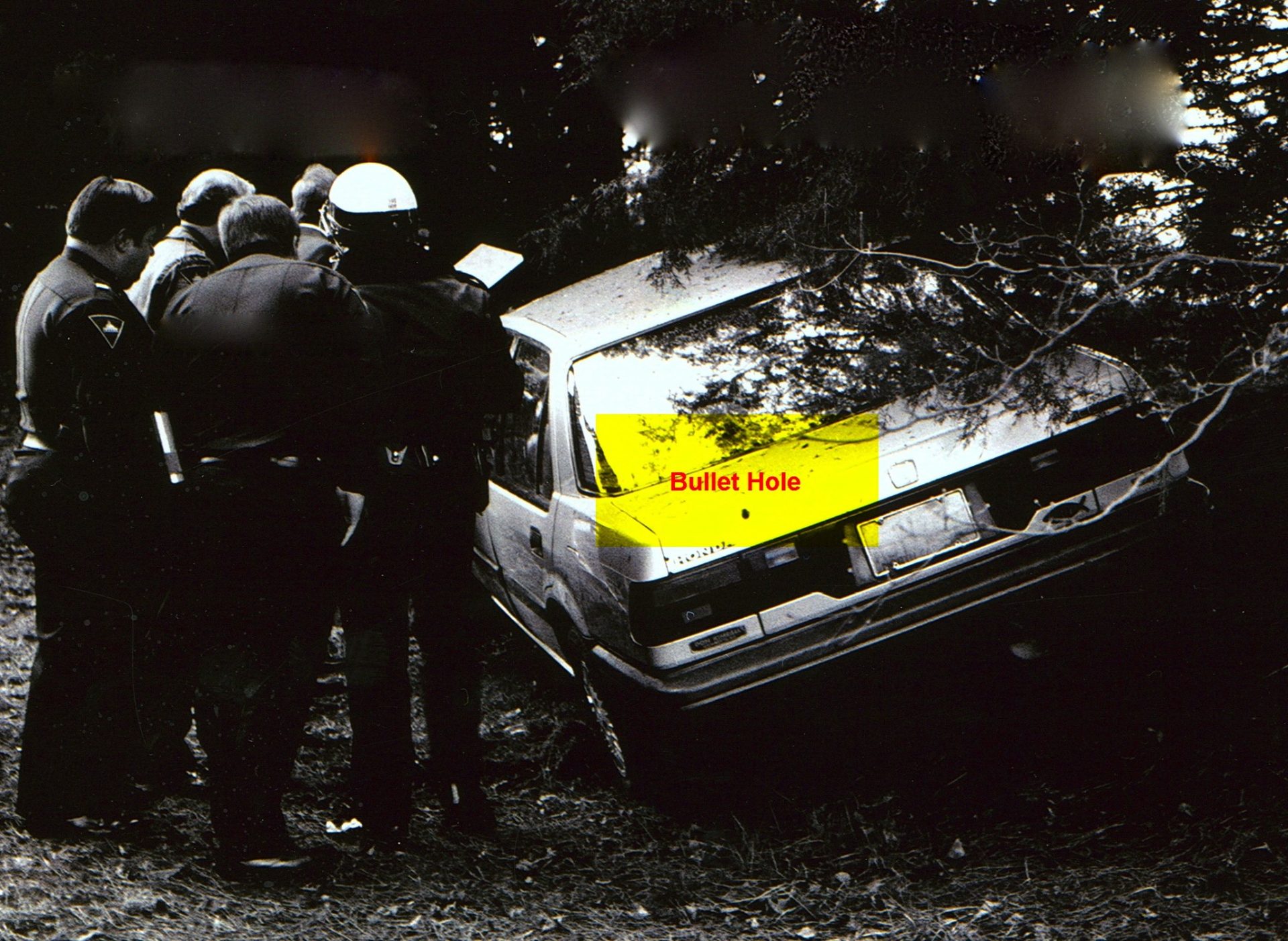
A photo of the crime scene in 1990. Police say the victim was shot as he fled in his car, that a bullet tore through the vehicle’s trunk and struck him in the back.
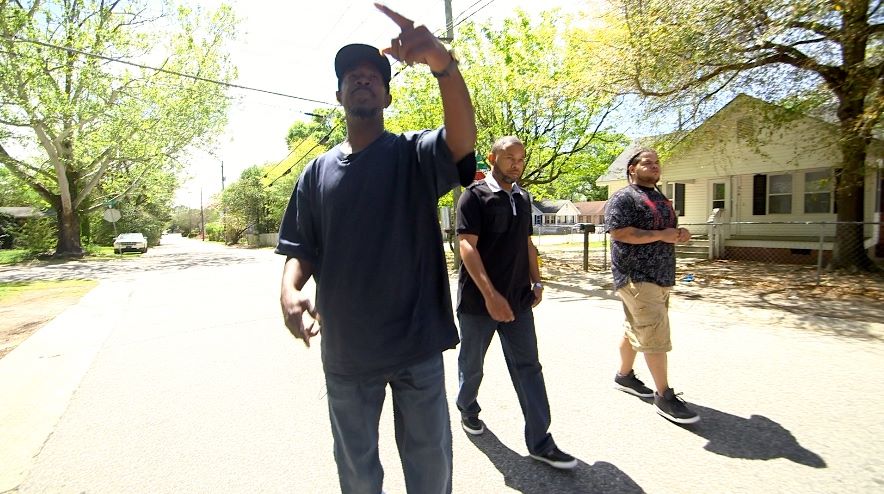
Ant Lee (pointing) was also originally charged alongside McKoy but the charges were dropped. Lee, McKoy’s uncle Mike Bethune, and McKoy’s son, Lamont McKoy Jr. return to where police say the shooting occured in Fayetteville, North Carolina.
McKoy’s attorneys argued that Williams’ description of the way McKoy allegedly shot Hailey didn’t match the physical evidence. Court records show Williams, who at the time was on parole for armed robbery and manslaughter, later appeared to make inconsistent statements in his account.
McKoy admits to dealing drugs, but nothing beyond that.
“I did some wrongdoing,” McCoy would explain years later. “But I didn’t commit murder.”
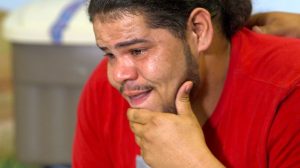
Lamont McKoy Jr. becomes emotional when talking about his father.
On at least two separate occasions, prosecutors offered a plea deal to McKoy if he would confess. He refused, he said, to ever admit to a crime he did not commit. McKoy and others testified that they were at someone’s home at the time of the shooting.
But other evidence used against McKoy involved supposedly incriminating comments he made to police several weeks after Hailey’s death.
During a traffic stop, when he was asked whether he was involved in the killing, McKoy responded to each question by saying, “I know it.” Prosecutors said the comments amounted to a confession. McKoy insists he was being sarcastic, annoyed that he’d been pulled over and was even being questioned in connection with the case.
After four days of testimony and five hours of deliberation, on May 2, 1991 a jury found McKoy guilty of first degree murder, and he was sentenced to life in prison.
McKoy’s early attempts to appeal his conviction went nowhere.
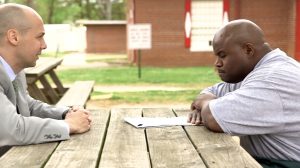
McKoy meets with his attorney, Jamie Lau, in 2017 when he was still in prison.
But four years later, in a seemingly unrelated case, 10 members of a local Fayetteville gang known as “the Court Boys” went to trial in federal court—including the aforementioned William “Rat Rat” Talley. Two cooperating gang members testified they saw Talley/Rat shoot at a driver who tried to rob them of drugs the night Hailey was killed, and that they saw the crashed car on an embankment the next day.
McKoy appealed again with this new information.
But then, the federal prosecutor who declared in court that Talley/Rat killed Hailey changed his tune, writing to McKoy’s state prosecutor, “I do not believe that this information provides enough evidence to charge Talley with the murder, nor does it provide enough evidence to exonerate Lamont McKoy.”
Refusing to give up, in 2001 McKoy connected with the Duke Law Innocence Project, a volunteer student organization through Duke University School of Law in Durham, North Carolina. It works to exonerate victims of wrongful convictions. Duke students soon began to uncover additional evidence suggesting McKoy was innocent.
Two more “Court Boys” gave statements saying Talley/Rat committed the killing, with one naming Hailey as the victim. Williams’ ex-fiancée stated under oath that, before his death, Williams had planned to admit he falsely implicated McKoy for a $1,000 reward. The students also learned that one of the two police investigators on McKoy’s case had since been convicted of taking bribes to drop drug cases.
But North Carolina state courts again dismissed McKoy’s appeal, saying that it came too late and that McKoy should have found the new evidence earlier.
The Duke team then went to federal court. There, buried in the thousands of documents turned over by the state, they found two pieces of paper: typed records of the first tips to police that came in after Hailey’s death.
Both said “Rat-Rat” was responsible for the shooting.
In late 2019, a federal judge in North Carolina ruled that the new evidence was “not conclusive” enough to meet the “very demanding burden” of “actual innocence.” In 2023, the U.S. Supreme Court then declined to hear the case.
Despite the failure of his appeals, McKoy was eventually released on parole after 27 years in prison, in 2017.
He’s still considered to be a convicted murderer.
“Everything is stacked against me,” McKoy says.
But he’s still fighting to prove he’s innocent.
“They went after Lamont McCoy. They built a case against Lamont McKoy. And I think there’s been a lot of conduct that was done in bad faith. That happens. It happens more than our system should tolerate,” says Lau.
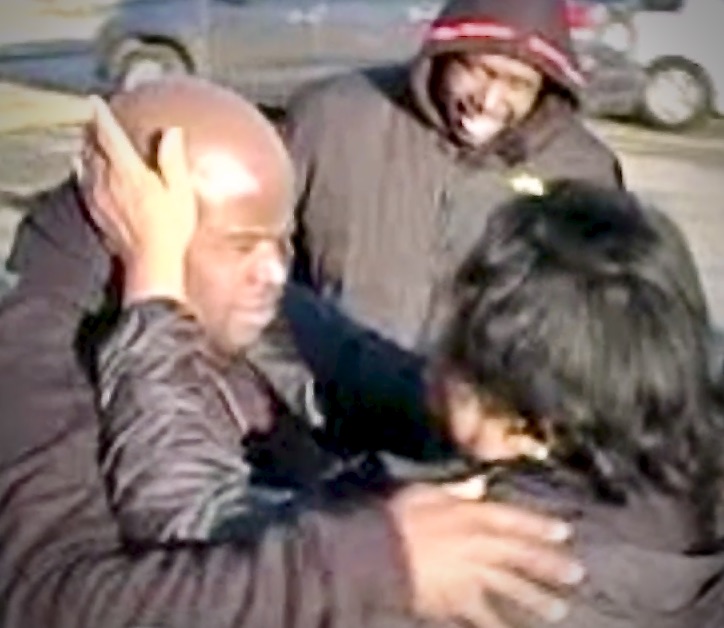
McKoy embraces his mother Mae as he leaves prison in December 2017.
Since his release, employers have rejected McKoy because of his criminal record. He works at the same scrap yard that hired him when he was a prisoner on work release.
Yet despite all their legal setbacks, McKoy and Lau haven’t given up hope, and continue to fight to clear McKoy’s name.
“Ultimately, Lamont McKoy wants his true freedom,” Lau explains.
The Reporters Inc. chronicles McKoy’s determination to find justice in the upcoming documentary Lamont McKoy: Search for the Real Killer.
Watch the trailer for the Lamont McKoy documentary here.
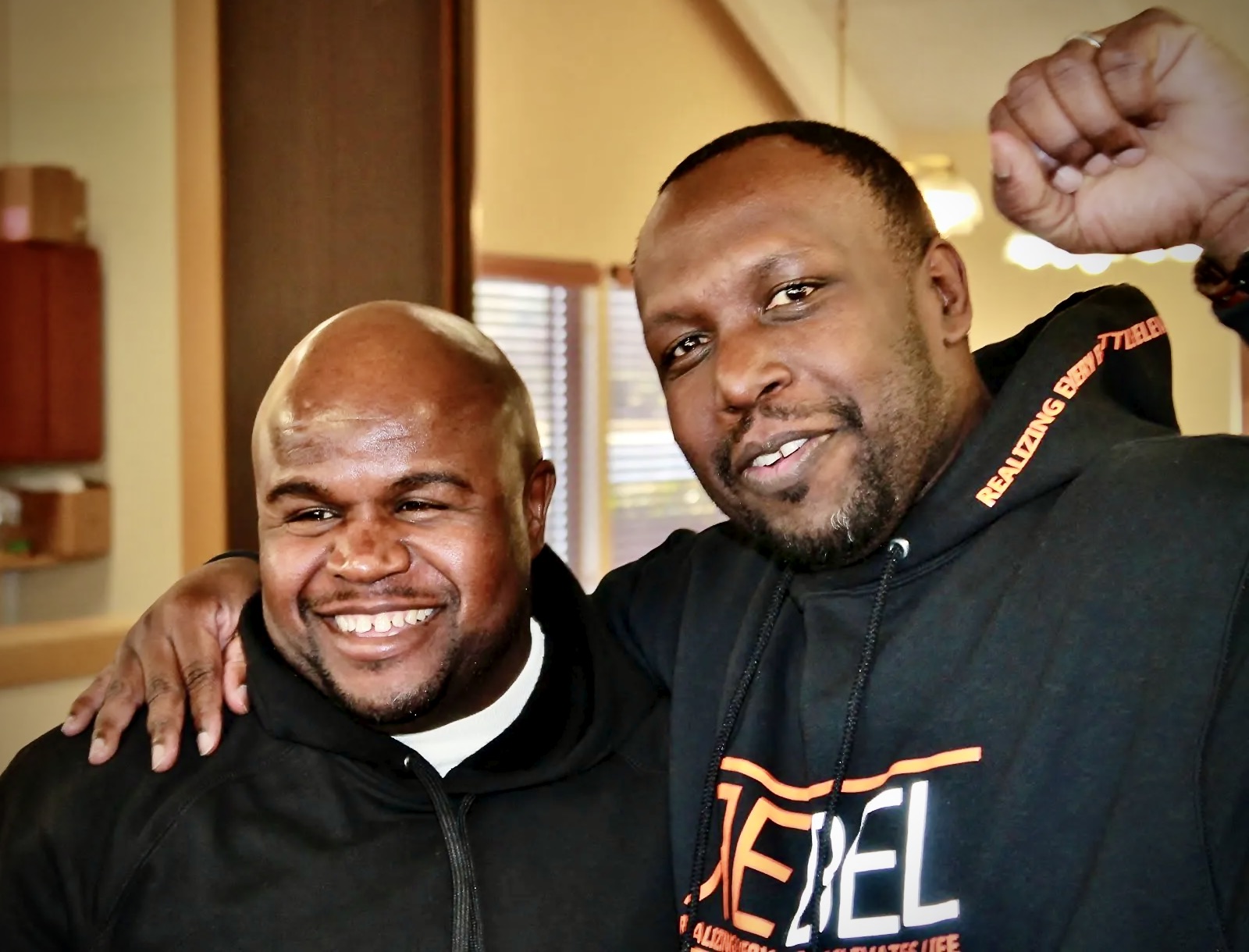
McKoy celebrates with his cousin Lamont Saxon after his release from prison in late 2017.
To provide information, or learn more about this project, email The Reporters Inc. at info@thereporters.org or call us at 612-333-3180.
SUPPORTING US
To fund our work, we rely on the generosity and support of people like you who believe that nonprofit media is necessary and vital for meaningful journalistic work to thrive and prosper. Please consider a donation today!
KEEP INFORMED
We’ll alert you about our documentary premieres, latest articles, new projects, and more when you subscribe to our e-newsletter. Just fill in your email address below.