A conversation about race in America, past and present—a discussion that somehow always stays the same
July 2026
My bestie and I were talking the other day. We were having the “Being Black in America” kind of conversation.
If you’re unfamiliar with that term, let me explain. Black people in America have this kind of discussion every day. At the supermarket, at the bus stop, at the barber/beauty shop, at home, at church—we discuss how to manage “Being Black in America.”
That’s because the rules keep changing.
Take, for example, what we’re called.
Personally, I’ve been labeled Colored, Negro, Black, and most recently, African American. (The last one I find difficult because I can go back five generations of my family in the United States before we even get to any descendants from African slavery.)
Just once I’d like to be referred to simply as “American.”
Then there’s the subject of our hair.
Or, more specifically, the “rules” concerning our hair. Back in the 1970s, in order to be considered for work at any White-owned business, we had to straighten our hair. I used to call it the “Black White-girl” look. Our hair, makeup and dress had to mimic styles worn by White women to be considered professional in the white-collar workplace.
In 2019, California passed The Crown Act, which was then adopted in 28 states and the District of Columbia. The law prohibits race-based hair discrimination, which is the denial of employment and educational opportunities because of hair texture or wearing dreadlocks, braids, cornrows or Afros.
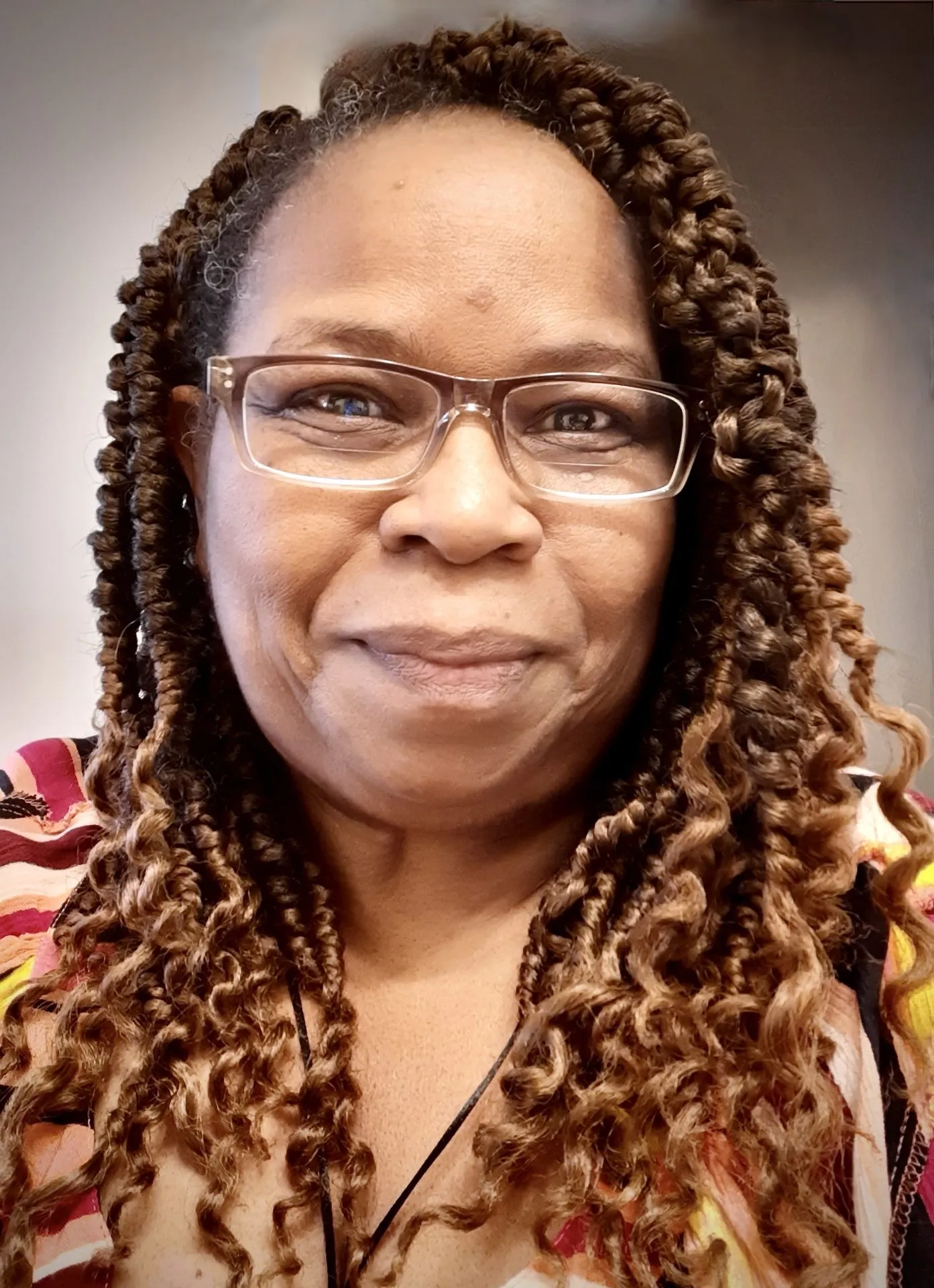
G. Marshall Brooks.
The “Crown” in The Crown Act stands for “Create a Respectful and Open World for Natural Hair.”
However, the protections still depend on local and state laws.
We also talked about how many attitudes towards music, food, dress, and education have also been altered by the Civil Rights Movement.
But now, in 2026, it seems like all of the advances towards a more united United States appear to be slipping away a little at a time.
My friend and I started discussing how the Movement changed what I call “the face of freedom” in America. I told her that I believe Civil Rights laws changed the meaning of freedom for everyone in this country, including White people.
My friend didn’t understand my point.
I explained that I believed racism had held this country hostage for most of its existence, and that the strict rules of segregation had been binding to ALL of its citizens, not just Black people.
White Privilege also had strict boundaries during the years of segregation.
For example, if a White person needed an emergency transfusion of blood, the blood of a Black person couldn’t be used, even if that was all that was available. If a White person needed CPR and a Black doctor was there, he was supposed to stand back while someone sent for a White doctor.
And the neighbors could never know that the lonely White widow next door sat in the kitchen for a meal with her Black maid, who had worked for her for 30 years. Heaven forbid if someone saw them playing a game of gin rummy and sharing a glass of wine.
This isn’t to say that the consequences for White people were in any way comparable to the cruelty and denial of rights people of color have lived through—and in many respects are still enduring on a daily basis in 2026.
Back then, Black parents taught their children they must never be alone on the street or go near the White neighborhood for fear of being hunted.
White parents taught their children not to be too friendly with Black children or bring them home with them.
Today, Black parents warn their children to be respectful, but also to be aware of how things can possibly escalate if/when they’re pulled over or stopped by a police officer. Today, it’s the George Floyds and Breonna Taylors that warn us that a lot hasn’t changed.
”Today, it’s the George Floyds and Breonna Taylors that warn us that a lot hasn’t changed.
Yes, police officers have to be on guard when the criminals have bigger guns than they do. But young Black and Latino men in our cities have to be able to quickly tell a good cop from a bad one.
And when ICE pulls up on your block, anything can and has happened without warning. Sadly, the Minnesota murders of Renee Good and Alex Pretti are examples of American citizens caught in the crossfire.
Back in the day, the existence of the Ku Klux Klan was meant to keep Blacks in line and mete out severe punishment if that line was crossed. But the Klan also felt it was its duty to punish Whites who were too friendly with Blacks, or those who were deemed too lenient in how they treated them.
The penalty for being an n-word lover could be nearly as severe as actually being one. Not just Black people woke up to find crucifixes burning in their yards. Today, I’m not aware of any fiery lawn crosses, but the internet is full of anonymous hate and divisive rhetoric from faceless cyberbullies.
Somehow, I just can’t fathom that every single White person in the American South believed, or still believes, in racism and segregation. But I do believe that, for some, fearing for your life, and for that of your family, was and is a strong motivator to keep silent in the face of it. And the “silent majority” has plagued us since the beginning of time.
I told my friend that I’m definitely not giving a free pass to anyone, whether they were or are actively involved in the oppression of any people or group, or have just stood by and watched. But I am positing the thought that bigotry and hatred have all people and groups in America restricted and restrained by their presence.
Then again, racism in this country hasn’t been relegated to only Black versus White. The Irish, Asians, Hispanics and Native Americans have all felt the leash of discrimination in America. Religious minorities like the Jews and Muslims have also felt the hypocrisy of not quite being “American” enough. However, people like me aren’t able to hide the color of our skin. Even when mixed with other heritages, we tend to stand out. Which makes it even more difficult to “blend in” to a culture that is still predominantly White.
Growing up, Black children are told the only way to become equal to Whites is to excel beyond excellence. We have to be—not just good—but better than good in order to be equal. If that sounds ridiculous, that’s because it is. But that’s been the burdensome philosophy many Black children carry from kindergarten through college.
Is it any wonder some just give up before they start?
As a result, that might be why many Blacks have created their own culture, within the United States. From slavery times to the present, Black Americans have been the source of soul food, hip hop, jazz and other cultural influences that have been celebrated around the world as American. Our clothes, dance moves, slang and attitudes permeate youth culture the world over.
Still, I believe there really is no such thing as “Black Culture” in the United States. And here’s why:
”I believe there really is no such thing as “Black Culture” in the United States.
By definition, the characteristics of the word “culture” are that (1) it is learned; (2) it is shared; (3) it is dynamic and (4) it is symbolic. Black citizens in the United States do not share all of those characteristics as a whole or in part.
Some of us share the idea of peaceful representation. Others share a more forceful or even a violent attitude towards representation. There are those who believe reparations will represent acceptance and equality. Others believe there will never be an acceptable form of equality.
Not since the time of Martin Luther King, Jr. and Malcom X have Black Americans been able to come together in agreement of what equality would look like in this country. And even then, each of those men represented a different vision of what equality for Black people would or should mean.
Today there are still wide divisions between the dynamics of how Black Americans could become united and/or accepted as equal citizens.
Furthermore, the separation between Blacks and Whites in our country today is often insidiously expressed in humor or with caricature
For example, “Blue Eyed Soul” refers to someone White who sings Black-flavored music with expertise.
Inviting someone non-Black to “the cookout” depends on whether they can adapt to Black food, or learn the steps to the line dance to Black music.
Taking away one’s “Black card” refers to a Black person who behaves “too White.”
We laugh at this stuff or take it in stride, but it’s still a sign of stigma and separation.
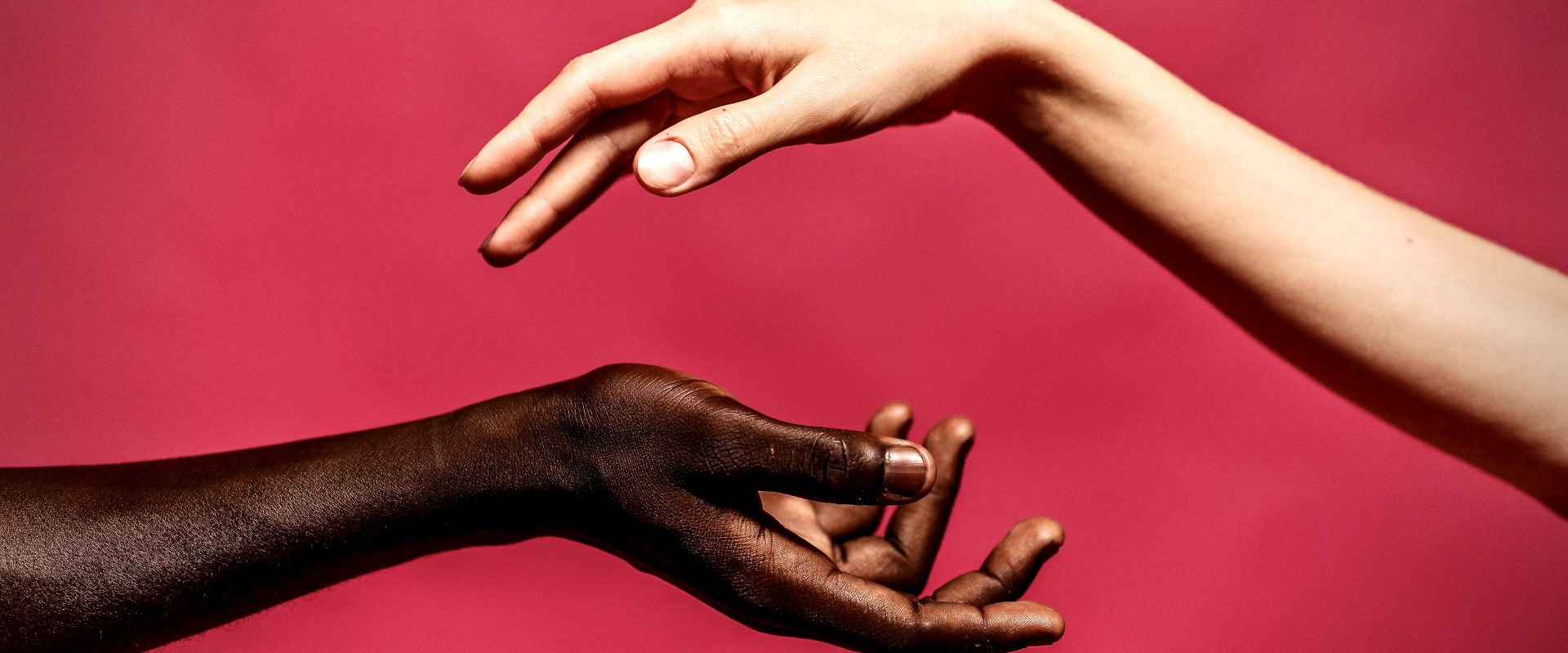
I keep trying to imagine a country where racism doesn’t exist. Without it, the exchange of ideas, music, fashion, food and ideologies would be unhindered. Without it, the richness of every culture could be explored and enjoyed by whomever wishes to do so. America would become a true melting pot of various hues.
Without racism, everyone—Black, White, Brown or Purple—would be free to be whomever they choose. And everyone would become equal members of the only true “race”—the Human Race.
G. Marshall Brooks can be reached at msgrmb@yahoo.com
The Reporters Inc. is a proud member of the Institute for Nonprofit News, a consortium of more than 500 nonprofit newsrooms dedicated to serving the public interest. Our articles are syndicated and shared with hundreds of other media organizations, online magazines, top blogs, etc. Please send news, feature and investigative story tips and ideas to info@thereporters.org.